Feeling stuck? Join our free community!

Stephanie Wright
Friday, November 13, 2026
You read every label — so why do sneaky gluten words still slip through? Here are the label terms that trip up even careful shoppers, and how to spot them fast.
This post may contain affiliate links. Read my disclosure policy.
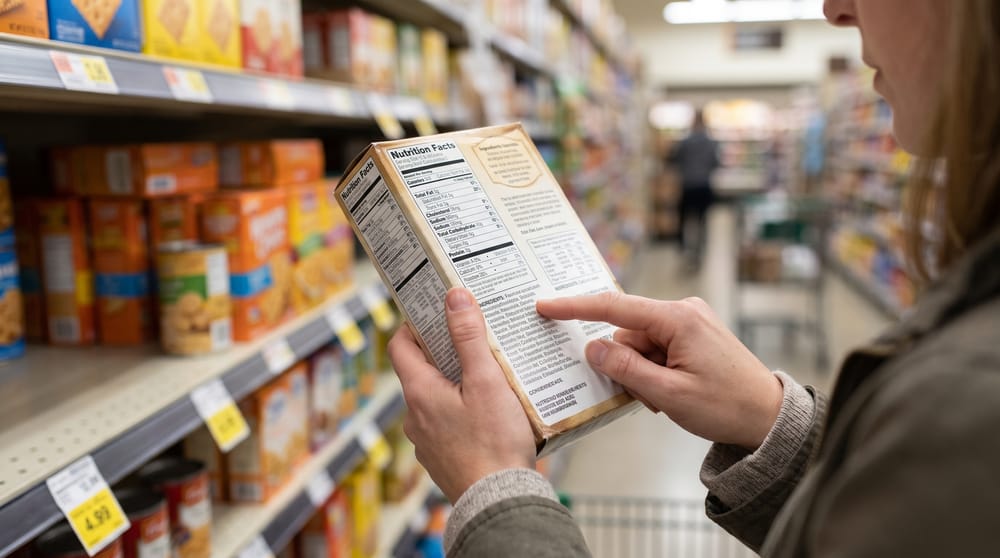
You can be the most careful shopper in the store — reading every label, twice — and still get tripped up by a word you didn’t recognize. I know, because it happened to me more times than I care to admit in those early years.
The problem isn’t that you’re not trying. It’s that gluten hides behind words that don’t sound anything like “wheat.” Here are the ones that catch even careful shoppers.
Start with the big three: wheat, barley, rye
These are the grains that contain gluten, and they’re usually called out on U.S. labels. But don’t stop at the word “wheat” — also watch for durum, semolina, spelt, kamut, einkorn, and triticale. They’re all wheat’s relatives, and they all count.
Malt means barley
Malt, malt flavoring, malt extract, malt syrup — these almost always come from barley. You’ll find malt hiding in cereals, candy, and even some chips. If you see the word “malt” and the product isn’t labeled gluten-free, put it back on the shelf.
Brewer’s yeast
This one surprises people. Brewer’s yeast is a byproduct of beer-making, and unless it’s specifically labeled gluten-free, it can carry barley along with it. It’s a different thing from nutritional yeast — but always check the label either way.
Hydrolyzed wheat protein
It sounds like a chemistry experiment, and it kind of is. Hydrolyzed wheat protein shows up in soy sauces, gravies, and seasoned products. The name says wheat right in it — but when you’re scanning a label fast, it’s easy to miss.
Soy sauce (yes, really)
Traditional soy sauce is brewed with wheat — one of the most common surprise sources of gluten in a pantry. Tamari is often the better bet, but “often” isn’t a guarantee. The simple rule: only buy soy sauce or tamari that’s labeled gluten-free.
“Natural flavors” and modified food starch
“Natural flavors” rarely contain gluten, but in some cases they can — and the label won’t tell you the source. Modified food starch is similar: in the U.S., if it’s made from wheat it must be declared, but the source still matters. My rule for both: if the package also carries a certified gluten-free label, I relax. If it doesn’t, I check with the manufacturer or choose something else.
The caramel color confusion
Caramel color causes more debate in gluten-free circles than almost anything else. In the U.S. it’s generally considered safe, but the confusion alone makes it worth knowing about. My approach: if a product with caramel color also carries a certified gluten-free label, I’m comfortable. When in doubt, trust the label — not internet rumors.
Your practical takeaway
Read the whole label, every single time — even on products you’ve bought before, because formulas change. Look for a certified gluten-free label as your shortcut, learn the handful of sneaky words above, and when you’re not sure, skip it. There’s always another option.
I keep a short list of these label words on my fridge during the holidays, when new products and shared dishes are everywhere. I put that same kind of help — the label words plus a smart shopping list — inside my Gluten Free Thanksgiving Survival Kit as the Safe Kitchen Cheat Sheet & Label Collection, so you don’t have to memorize any of this.

About the author
Stephanie Wright
"I am a 24 year Celiac and busy mom of four. I help people who are newly diagnosed — or just plain struggling — learn to eat gluten-free safely, and actually enjoy food again. Real food, calm guidance, no panic."
See other posts like this one:
Friday, November 13, 2026
How to keep your kitchen safe from cross-contact (without buying all new equipment)
Thursday, November 12, 2026
Hosting a gluten-free Thanksgiving where no one feels like they got the “special” plate
Thursday, November 12, 2026
First Gluten-Free Thanksgiving? Start Here — The 5 Things I Wish I'd Known 24 Years Ago
Stress Free Gluten Free
Real food. Real help. Easy, with no added stress.
*The information on this site and its affiliated social media accounts is for general education and lifestyle support only, and is not medical advice. Always talk to your own physician about your specific health questions. I'm here to help with the everyday side of gluten-free living — your kitchen, eating out, holidays, and all the real-life situations in between.